Basílica de San Papel
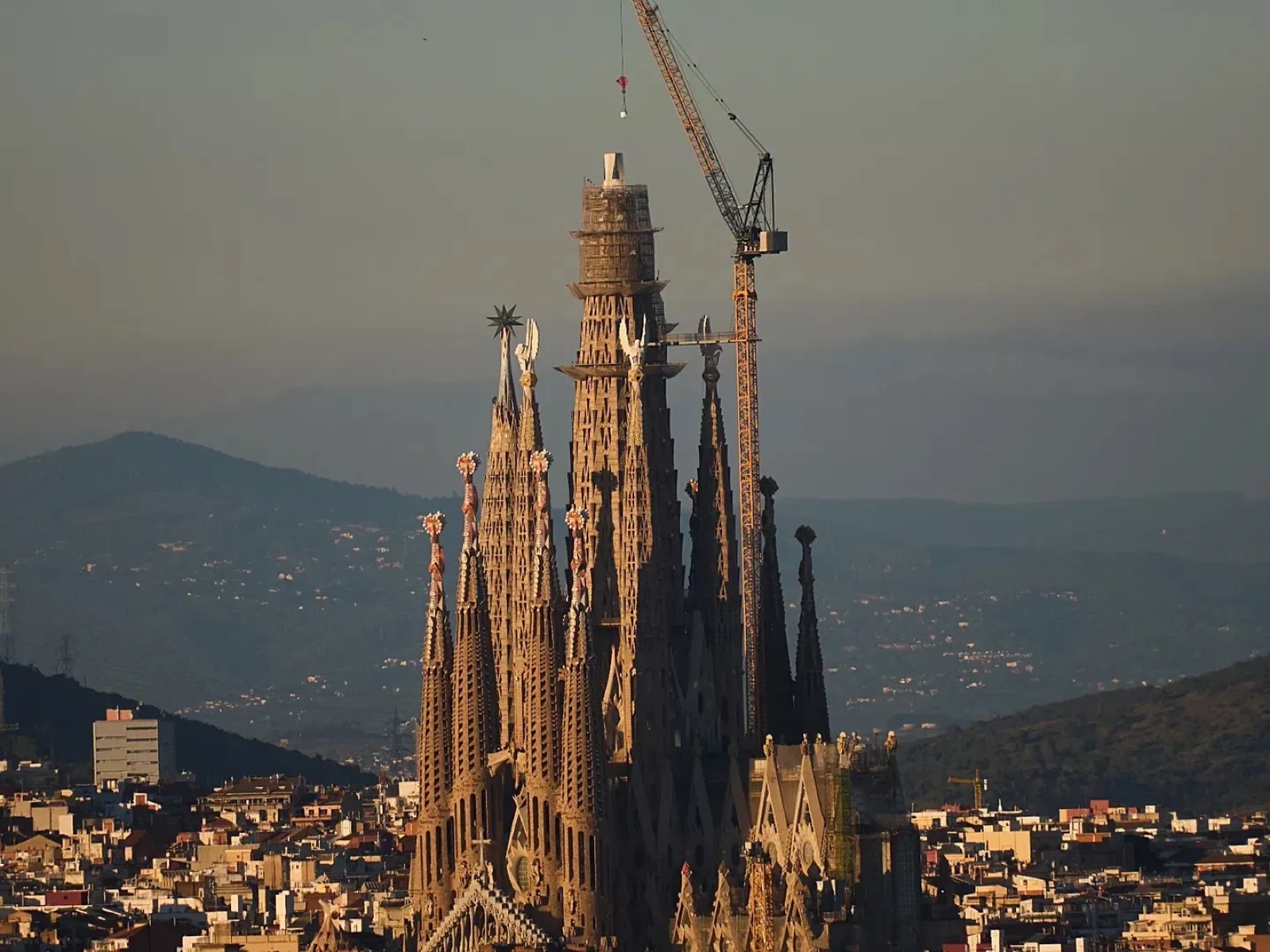
That building is still under construction; so I booked a tour to Casa Milà.
0. A Journal Entry
July 14
PaperHouse should be a personal project, not a source of income. Accept that you haven't convinced yourself to turn this into a business yet. So finish this art and go back to living life.
PaperHouse has not been finished. So is the Sagrada Família. Therefore, please allow visitors.
Basílica de San Papel
1. Dreams, and turning them into Reality
I've always loved the concepts of "observation" and "collapse" in quantum mechanics. Schrödinger's cat, for example. Before you observe it, the cat exists in a state of superposition, both alive and dead at the same time. But the very split second you look, the die is cast; the cat's fate is sealed, locked, and unalterable.
If I told you that your life is exactly like this cat—that as long as you refuse to face the critical questions, the cat retains infinite potential. You are free to customize its breed, its fur, its color, and everything else.
Naturally that sounds very enticing to a creative mind. So I think: if it were entirely up to me, this cat could be cream-colored with faint orange stripes. He would have a harmonious face, and love curling up next to people to sleep. Every visitor and every other cat would inevitably fawn over how mesmerizing he is; he is the Justin Bieber of cats.
But I'd also love a cat that is pitch black. I've seen some incredibly striking black cats. I'd want him to have a stone-cold bone structure, a piercing gaze, and a vigorous stride. Looking at him, you couldn't help but wonder if he flies out the window and saves the city while you sleep. Well imagine Batman, but a cat.
Are you still dreaming? Don't forget that in this space, time isn't real. You could spend an eternity traversing every single possibility.
Just know that the more you fantasize, the more likely that when you open the box, the cat inside has already become a decaying corpse.
In imagination, all options are true; all the breathtaking wonders are gathered up your mind. But refusing to choose is a choice of its own. To not choose is to remain Peter Pan, forever intoxicated in your Neverland.
Thousands of possibilities exist simultaneously in the universe, and all of them are true; alive and dead at the same time. Right now I can see all my future selves, preaching, writing, singing, entrepreneur-ing. An exciting new era is upon us, and I see myself living a million different lives.
But when I return to reality, when I take action, I find all my joy and sorrow stem only from my lived experiences, and my career and relationships take shape only with the real choices I've made. Yes in theory, the imaginary space of choice is endless; but its real domain is in fact very narrow. See, "free will" is this tiny, slight steering back and forth between our handful of known options. But of course, sometimes in those subtle sways, we stumble upon an unexpected path that leads to the promised land.
2. Thinker and Doer, and their limitations
Needless to establish, a life is built. What is meant by “built”? Designing then constructing a house with your own hands. There is thinking and there is doing. But our hands are limited and the world is vast. I find the process much akin to raising a tower as an ant.
Do not live with no guiding thought; that is like having no blueprint at all. Throwing bricks wherever they land, and using whatever materials happen to be around. Trivially, such a life is not worth living. Even if someone manages to build a decent house purely by luck, it will mean nothing. People might come congratulate, and he might feel incredibly "tuff" because they say he is. "Shit, I'm him." But that is a mimetic behavior throughout. His heart is empty, for he never understood why he builds since the beginning.
But do not live only with thought either, do not spend a lifetime designing the blueprint. Sitting at the desk drafting endless possibilities; sounds fun yeah? Because you know the actual work of laying bricks isn't nearly as fun. You hate sourcing the materials, coordinating the workers, or convincing the investors. Your passionate vows crash into the reality of daily chores; the artist's fiery love crumbles instantly before his fastidious perfectionism.
To live a good life splits into being a good architect and a good operator, which requires skillsets in perpendicular directions. There is an upper limit for the skill points free to allocate; to pursue the greatest work, assuming you've maximized your dedication, we must consider what happens at that limit.
There will be two forces pulling you apart: Love more the wild freedom of the mind, easier to detest the mundane friction of day to day. Enjoy more the serendipity of real world interactions, harder to tolerate the monotony of creative solitude.
With diminishing returns, there exists an incredibly delicate balance, where all the forces collaborate and play a sublime symphony. Yet the joy of creation and the pleasure of real world are both highly addictive, and addiction tilts the scale. To keep this scale balanced is to have immense discipline, whether through sheer self-control or a meticulously designed external structure.
I believe that only a life seeking this balance is worth living.
3. On “Life Advice”
I have some incredibly smart friends who never date. As the saying goes, "a wise man never falls in love, a fool is trapped in his feelings." I suppose it is good for rational thinking. But while they don't date, many of them have endless theories and insights about love, and they love to bring these thoughts to me for discussion. Often at the start, my friends have a crystal-clear definition of what "good love" looks like. But the more we talk, and the more stories we bring up, the more we realize that the sheer mystery and whimsy of life can never be neatly captured by theory.
Sure, you can say "good love" takes work, communication; no ego, be thoughtful, so on. That makes a pure and lasting love, we agree. Feel free to repeat these few sentences, because they are true—truth is never complicated.
But when these friends actually get into relationships, they find if their partner talks to a new guy/girl for two seconds with a little too much passion, their mind starts spinning out of control. Well, since I'm upset, we should communicate, right? And if not careful, communication is easy to overspill into "throwing a tantrum", taking all your frustration out on your partner. Inevitably you two fight. Inevitably you feel deeply ashamed after: I shouldn't blame them, I am so immature! Am I gaslighting? But the next day, your partner comes to apologize, promising they will never talk to that guy/girl again. So you are thrilled again: That's the power of communication! Good job and I am already mature. Please be more forgiving of yourself, don't ever blame yourself again; you must love yourself before you can love another. And so you keep "communicating" this way, the partner keeps yielding, things get more and more "comfortable". First you decide who they can talk to, then you correct their tone and attitude, then you permit what hobbies they can do. Until eventually, you've successfully customized a person from scratch, which also happens to be the same time they ask for a breakup. Unfortunately you will weep, utterly bewildered as to why. From start to finish, I was guided by the right principles of love; how did I fail?
So the next time you find somebody, you learned to tolerate. Very peaceful, you two never argue; because to have a foundation to argue on you guys would have to talk. Naturally that also leads to a breakup.
It takes months, sometimes even years, to look back and realize exactly where things went wrong—to see which specific thoughts were in fact self-indulgence or over-correction, masquerading as great wisdom.
Generic life advice is unhelpful because language can never paint the full picture. I think of language as a second derivative. Its job is simply to point us in a direction. Picture a steering wheel. "Openly communicate" is like steering left; "give each other space" is like steering right. When starting a career you hear people say, "successful people have delusional confidence," that equates to "steering left"; "successful people have humility and no ego", that equates to "steering right".
Many people learn how to turn left, and then spend years boasting how much they know about "the art of steering left". That's why years later you see them still spinning in circles at the exact same intersection.
There is a huge chasm between knowing and doing. Even after you've mastered them as one, you still can't hand your friends a new revised "methodology." The make or break of anything lives entirely in the nuance, or what Wittgenstein called "that which cannot be spoken." But you can volunteer to ride shotgun a few times, and at critical intersections, use your newfound wisdom to show good decision-making. Over time, they might actually learn something.
4. Notes from a self-proclaimed driving instructor
As a novice driver myself, I know very well driving is no easy feat. Commanding the steering wheel, gas pedal; hitting brakes, switching gears; mastering these mechanics alone takes years of practice. Remember to always abide by the traffic laws, or else see you in court. Not to mention the most important item, the map, starts from 0% and is waiting to be discovered. You can only piece it together little by little, by asking for directions or searching for clues.
Imagine a racing enthusiast who has read every book, watched every fast and furious movie, but has never actually touched a steering wheel. Yes, his theoretical foundation is incredibly strong, but if this person goes around calling himself the GOAT of racing, he is daydreaming. This is why for your first few drives, better have an experienced driver sitting in the passenger seat.
Philosophy works the same way. Many great philosophers lived utterly miserable lives despite having built beautiful high-rise theories. If the discipline of philosophy was created to answer "how to live a good life", then they are no different from relationship gurus who never fell in love, or racing enthusiast with no driver's license.
Still, we can appreciate the beauty of theoretics and ideologies, and lose ourselves in it from time to time. Beauty is an end in itself and requires no further proof. I highly recommend taking the time to appreciate that beauty, even knowing these ideas are not the truth itself but pictures taken of it. Once I loved looking at incredibly fantastical architectural blueprints, like the Tower of Babel, or ultra-sleek flying cars. You know these things don't exist in the real world because the resources required to build them would be absurd. But stopping by to admire them is still good for the soul.
5. On stepping in the Arena
I love these smart friends of mine, because they actually put their hearts into figuring out the important questions.
Many people date without ever putting their hearts in. The girl's friends say "he's a catch," the guy's friends say "she bad," they say "well I guess we look good together", so they get together randomly and break up cluelessly. It is all a trance.
On the other hand, some put their hearts in but forgot about the brain. If you always fall for the same patterns and get the same traumas, then don't call it having a "type" since you have no pattern recognition skills.
But I mean it sincerely, love is beautiful. Apologies for the rude remarks above. I do hope the people of this world Love more. You only understand when you are in it. Don't let the fear of my critiques stop you from loving, for it's not the critic who counts; not stepping into the arena would be a massive loss for you, not me.
In fact, sections 1,2,3,4 talks about the exact same thing. Or rather, all of my works talk about the exact same thing. Or perhaps, all the written works in the world is trying to say the exact same thing.
To quote Kierkegaard:
Marry, and you will regret it; don't marry, you will also regret it; marry or don't marry, you will regret it either way.
Laugh at the world's foolishness, you will regret it; weep over it, you will also regret it; laugh at the world's foolishness or weep over it, you will regret it either way. …
This, gentlemen, is the sum and substance of all philosophy.
One of the main reasons I stopped writing in high school was a painful realization that, everything I wanted to say had already been said by those before me. I thought writing made me special. Learning that my "creative genius" was never that creative nor that genius—that throughout human history, God has gifted the exact same inspirations to a chosen few—I felt incredibly defeated. I was no longer special; and if something isn't special, what is its reason to exist?
That idea sounds quite stupid to me now. We create for the sake of creation. Do you play soccer because you think you're Messi? Nah. Because playing the sport just makes you happy, it makes you feel alive. Those who feel this the most naturally become Messi.
But of course, even Messi needs to understand tactics, handle contracts, learn collaboration, practice leadership. In a hero's journey, the most important and costly lesson is to embrace constraints. Seeing systems and structures as your friends instead of oppressors.
This is what I meant by that delicate balance: everything is so simple, yet far from simple. Every truth is already common knowledge, yet they all remain hidden in the corners of the world, still waiting to be unearthed.
6. First of all, LIVE; don’t die like Gaudi
I have deeply enjoyed the process of making PaperHouse. Creation is life and beauty is its manifestation. But to allow life to unfold, I must see it as a rough, unpolished stone, not a finished, shining diamond; otherwise I'm inviting disappointment through the door. Understand that my day to day is going to be bricks and concrete falling from the sky, not the completed Sagrada Familia.
I want to build PaperHouse and build it well. I have a borderline pathological obsession with making the perfect product, so I tell myself let it go. For the more you obsess over the gorgeous blueprints of the cathedral, the more likely you are to die a death like Antoni Gaudi.
Just refreshed my memory about this story; wow what a tragic way to go. On his way home, Gaudi was hit by a tram, and because he was dressed so raggedly, people mistook him for a homeless person. Everyone would help a great architect; nobody helps a homeless person. The genius mind behind the most beautiful structure on earth died on the side of the road, left squashed like a roadkill cat.
Lately I've noticed myself walking without looking where I'm going, and eating completely spacing out, to the point where my friends have yelled at me multiple times. Many thanks to Edmond for keeping me alive.
The PaperHouse project will always exist. It's just that I've realized a structure like this needs a lot of resources and a lot of hands to build. Even if my heart is desperate to see the grand dome completed, our construction must return to the sturdiest foundations. Moreover, I need to make some money right now. In the city of SF, my Florence, I need to survive first before talking big dreams.
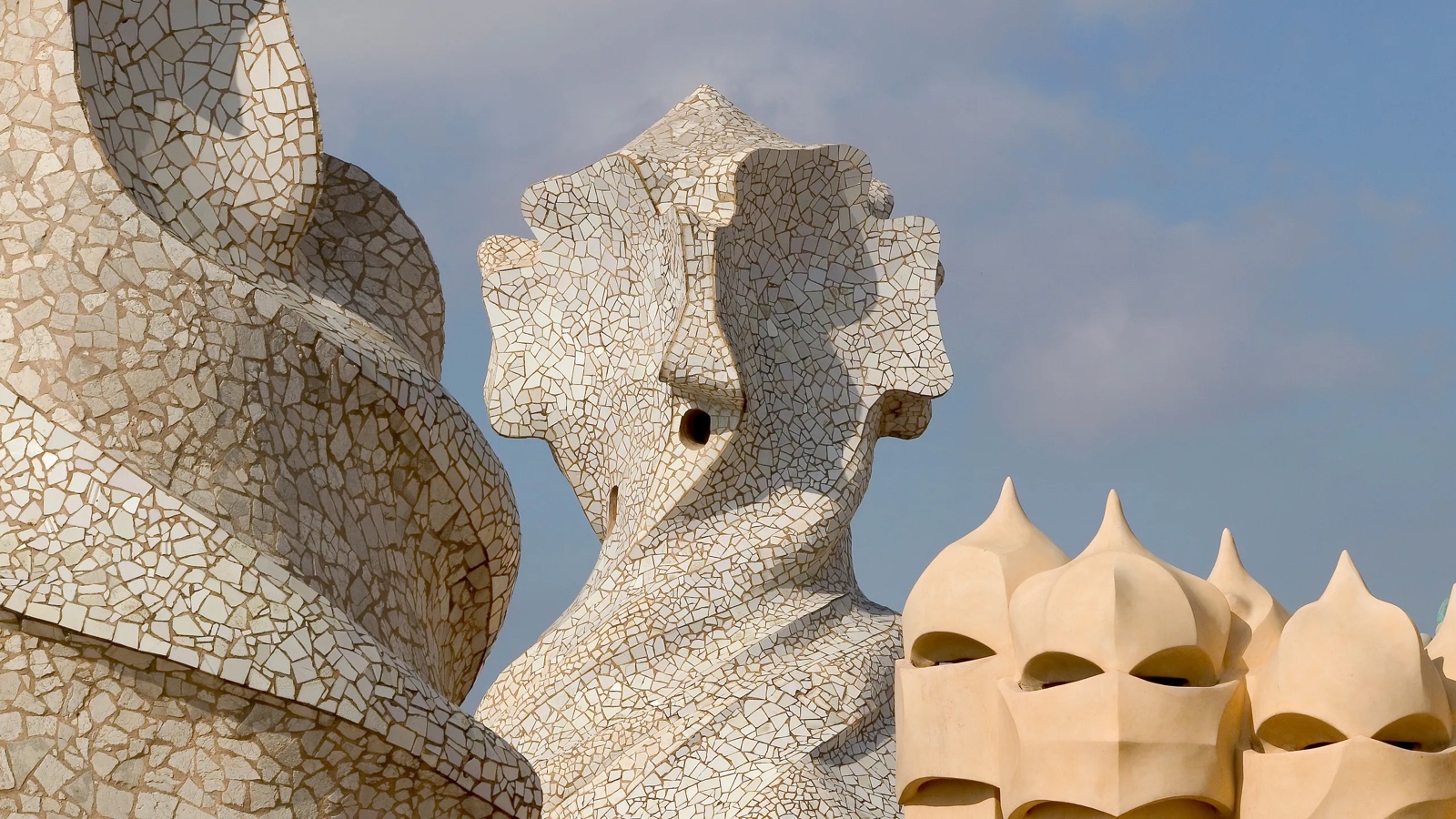
This is the most chaotic piece of writing I've done in months; people call it "flow state." Maybe I'll find some time to clean it up into a few proper "essays and theses," or maybe I'll just leave it scattered like this. Like Casa Milà, strange, annoying, and whimsical. The readers will have to wander through this maze on their own. I suppose most likely, they will be frustrated by the nonsensical curves and bizarre imagery, wondering what on earth is going on inside the house of paper and the head of Haoji.
Haoji Wang
July 15, 2026